The Village People
Gotham NYC January 2026
Artists on view: Lamar Robillard, Madjeen Isaac, Joseph Cochran II, Marcus Manganni, Justin Sterling, Atomic Peace x Yvonne Mccoy
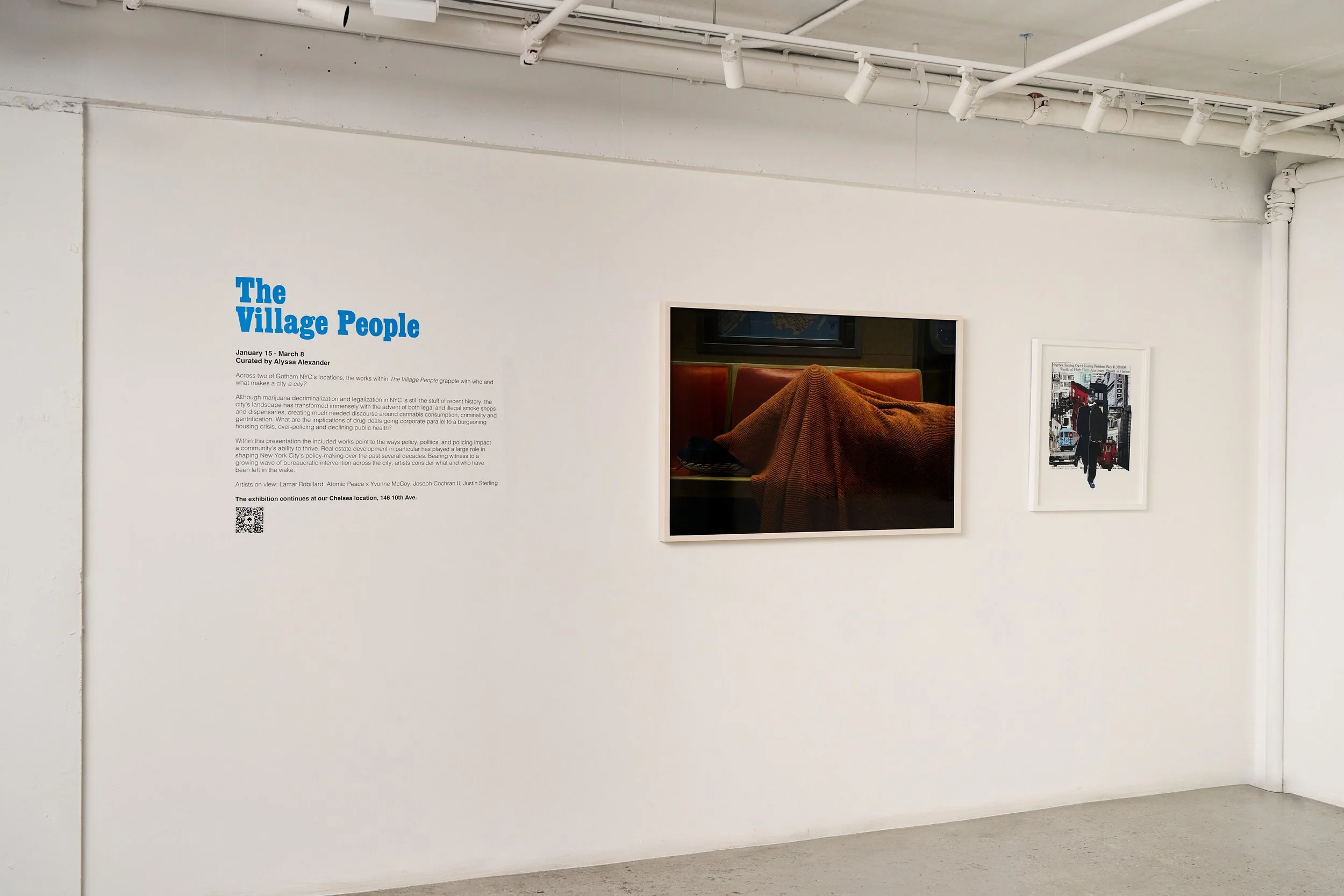
The works within The Village People collectively ask: who and what makes a city a city? Across two of Gotham NYC’s locations, included artists interrogate the systems that shape urban environments through photography, collage, sculpture, painting and installation.
Although marijuana decriminalization in NYC is still recent history, the city’s landscape has transformed immensely with the advent of both legal and illegal smoke shops and dispensaries, creating much needed discourse around cannabis consumption, criminality and gentrification. What are the implications of drug deals going corporate parallel to a burgeoning housing crisis, over-policing and declining public health?
In her seminal work The Death and Life of Great American Cities, Jane Jacobs gets into the minutiae of how mid-twentieth century cities are conceived, the biases and value systems inherent to urban development, and who determined the efficacy and “success” of major urban centers. Both before and since Jacobs’ field study, crime and safety are consistently at the forefront of conversations around city living - the perceived danger of living in proximity to abject poverty, drug sale and use, and the crime that is “intrinsic” to those conditions. Safety, as Jacob’s offers, is less often a product of law enforcement efforts, but more a social practice of individuals in their communities keeping each other safe. Artists featured in The Village People probe the means by which cities like New York - and the people within them - endure shifting social, ideological, political climates. They consider themes like policy-making and development, policing and surveillance, community and mutual aid in relation to both their studio practices and engagement with NYC and other urban centers.
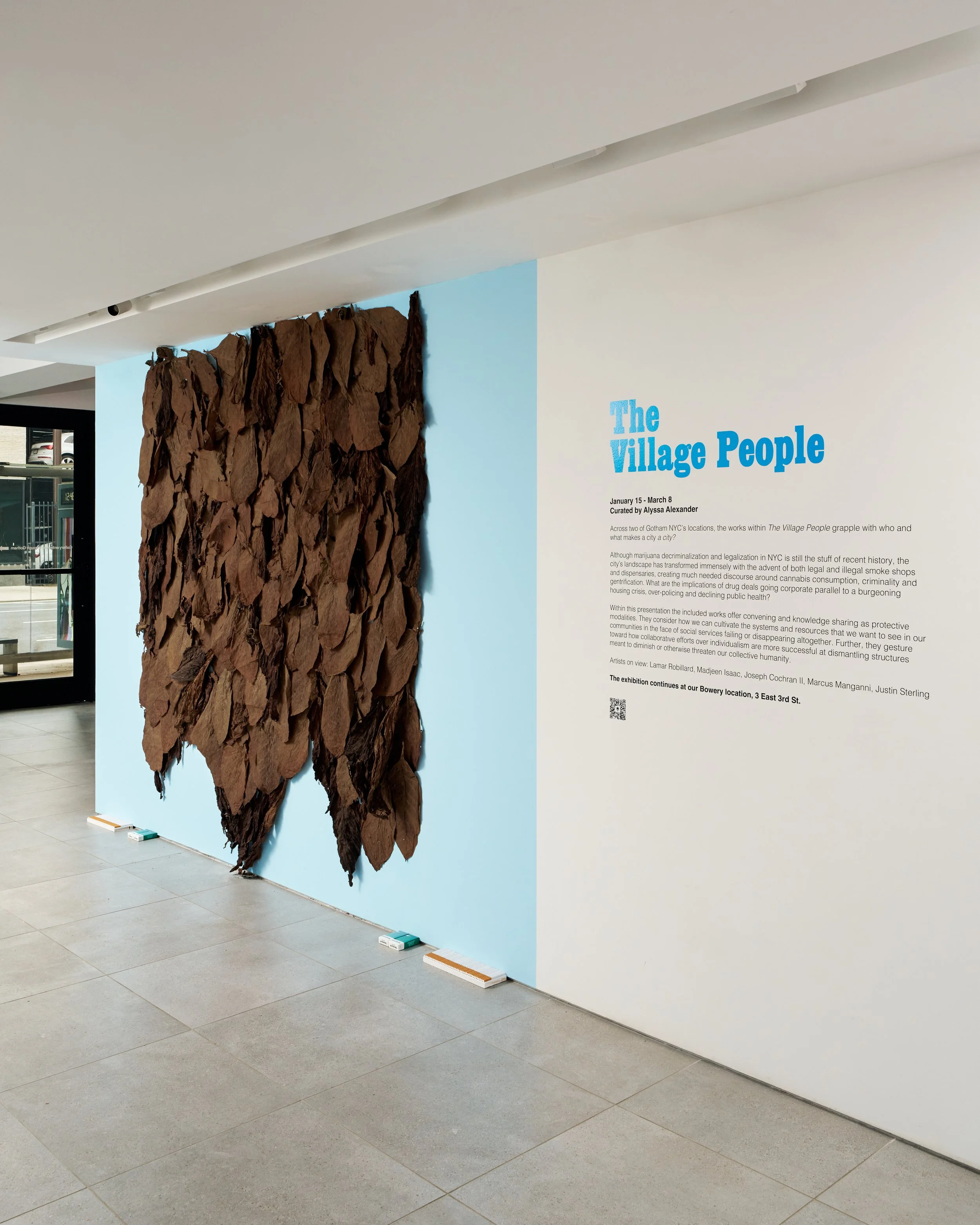
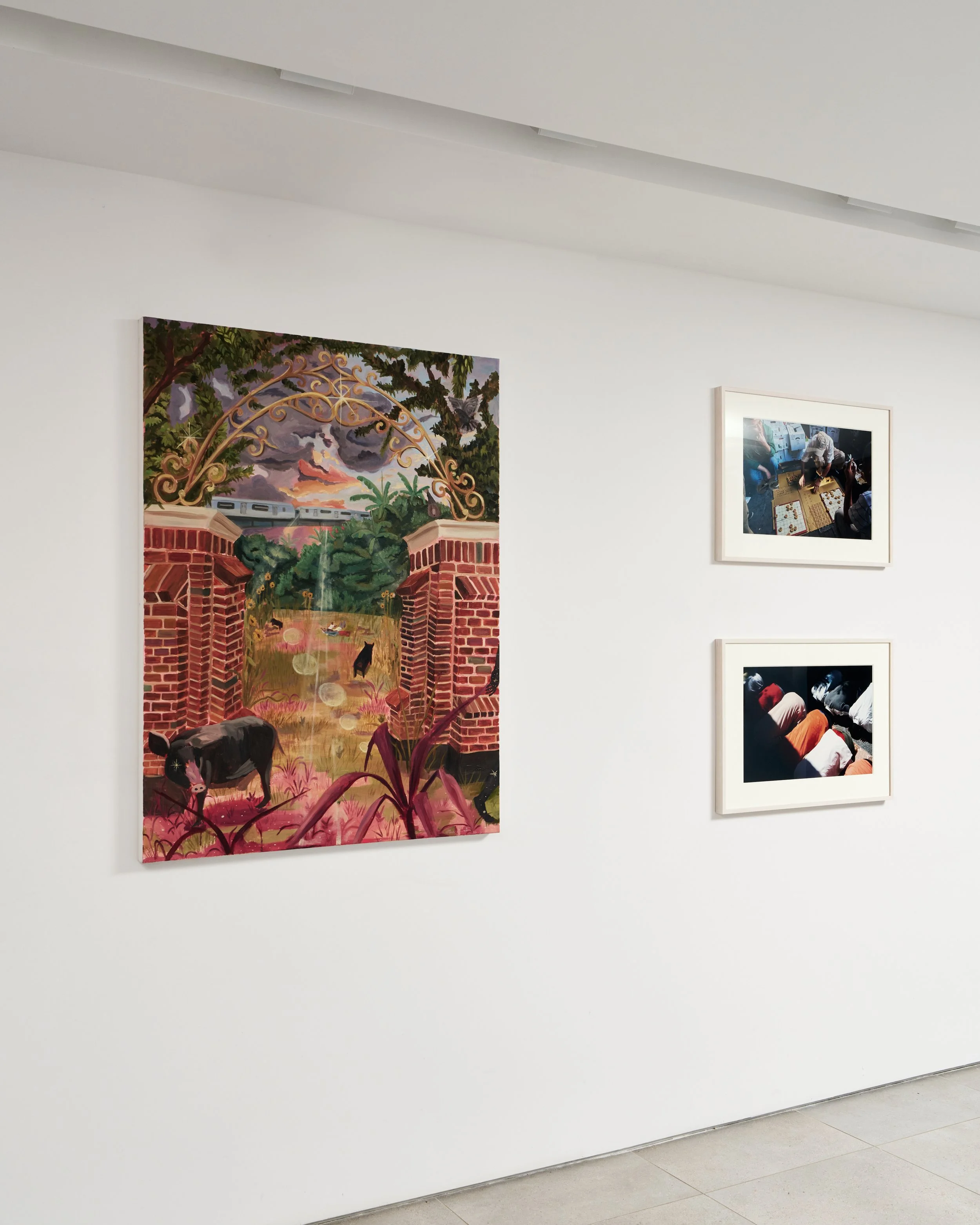
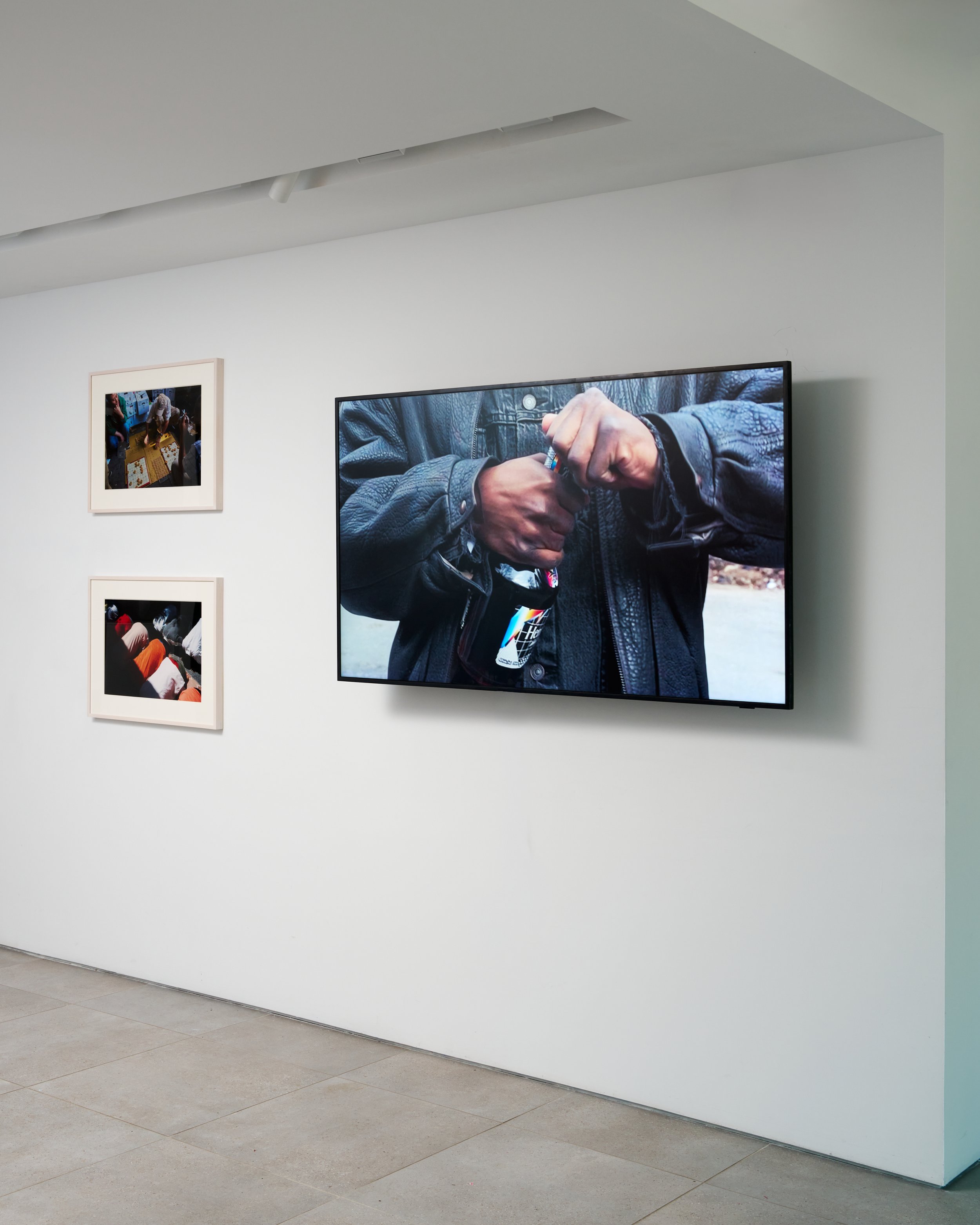
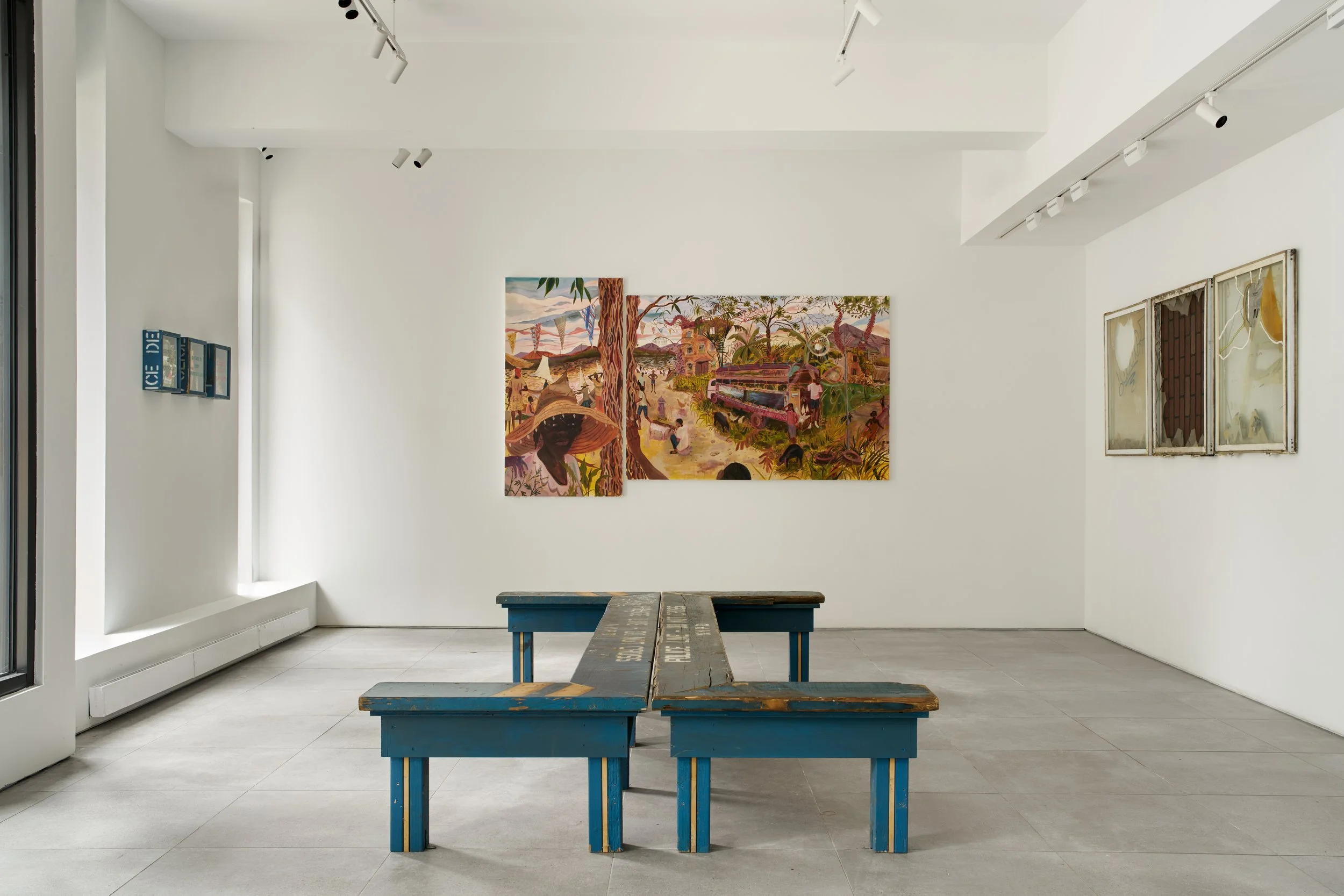
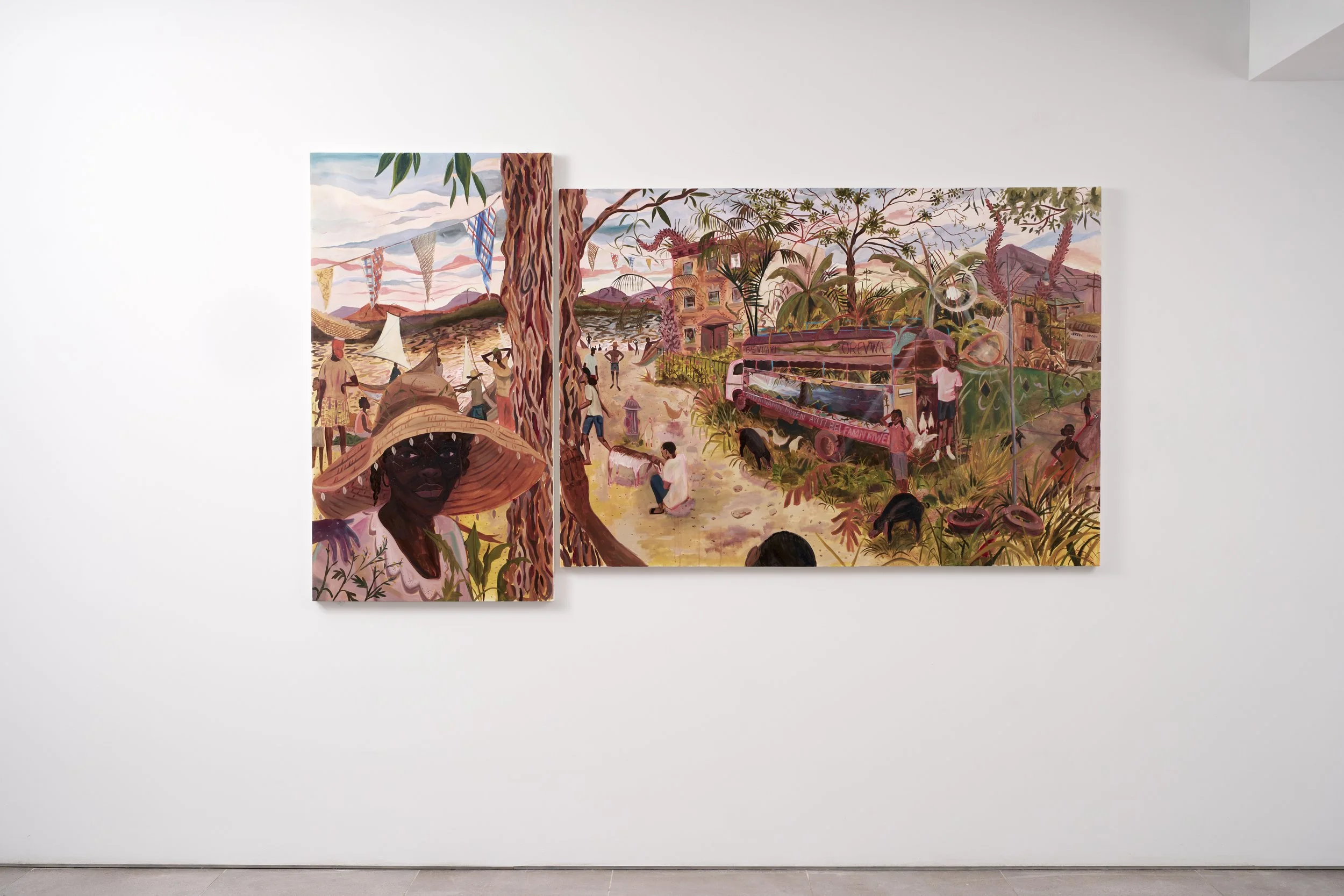
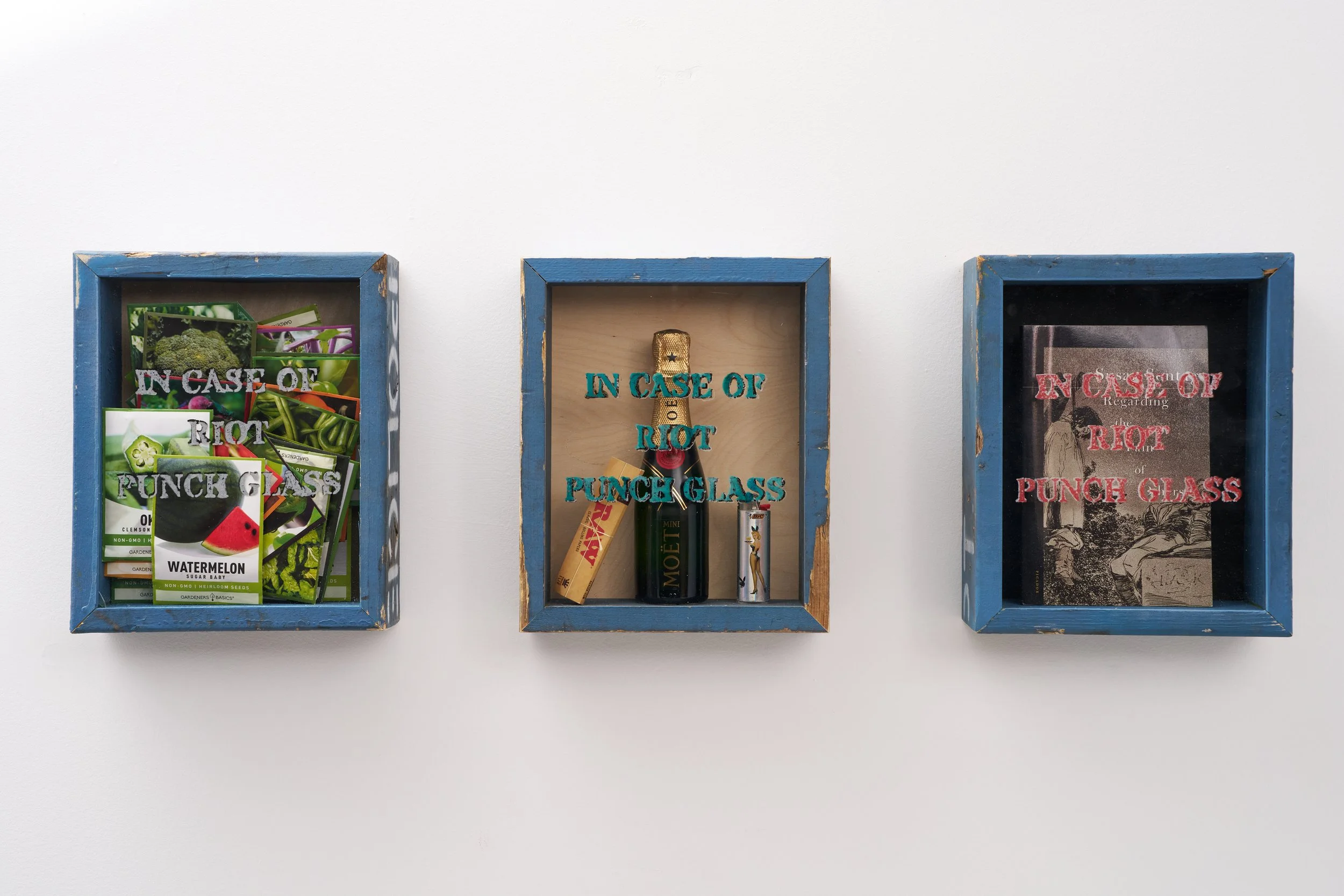
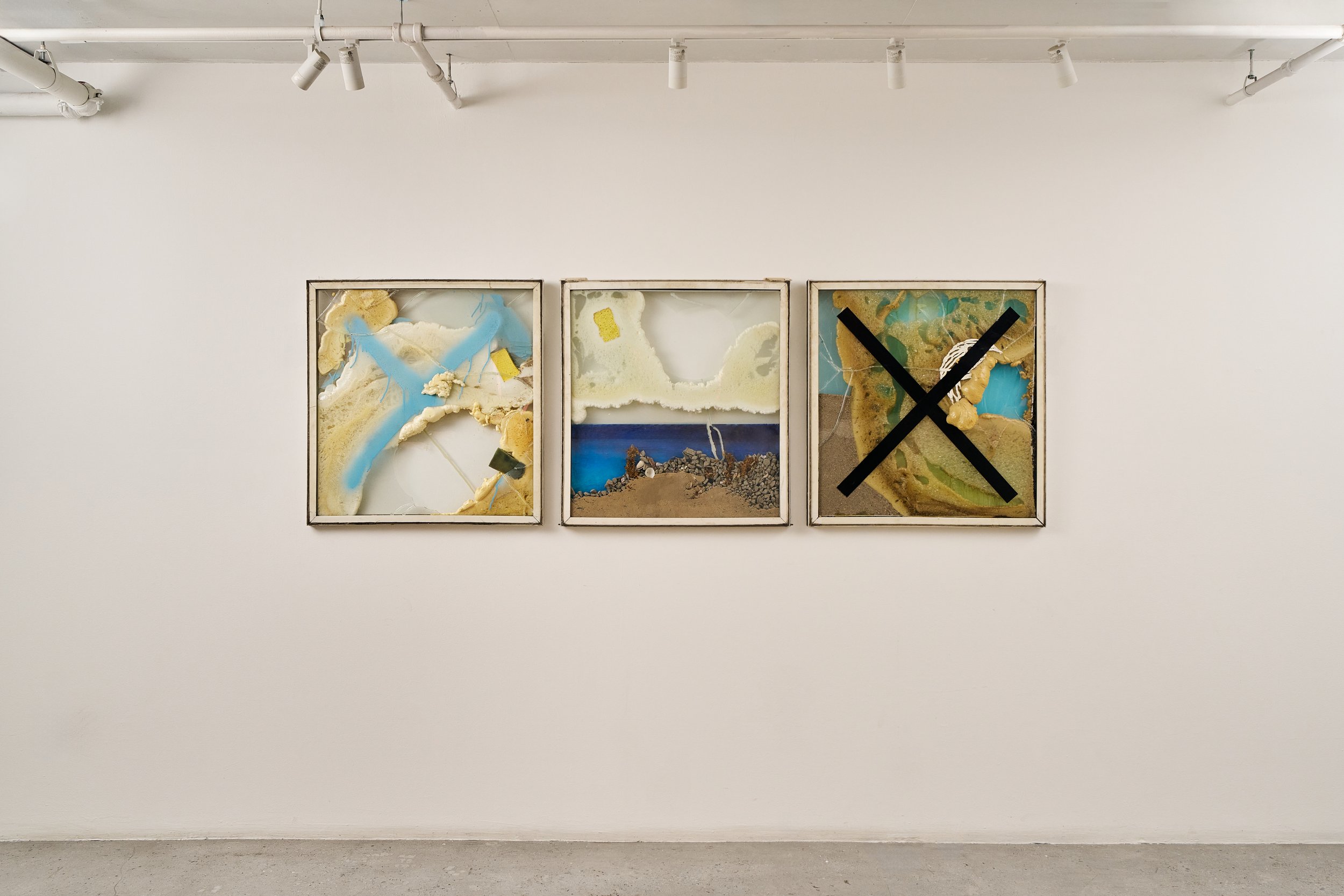
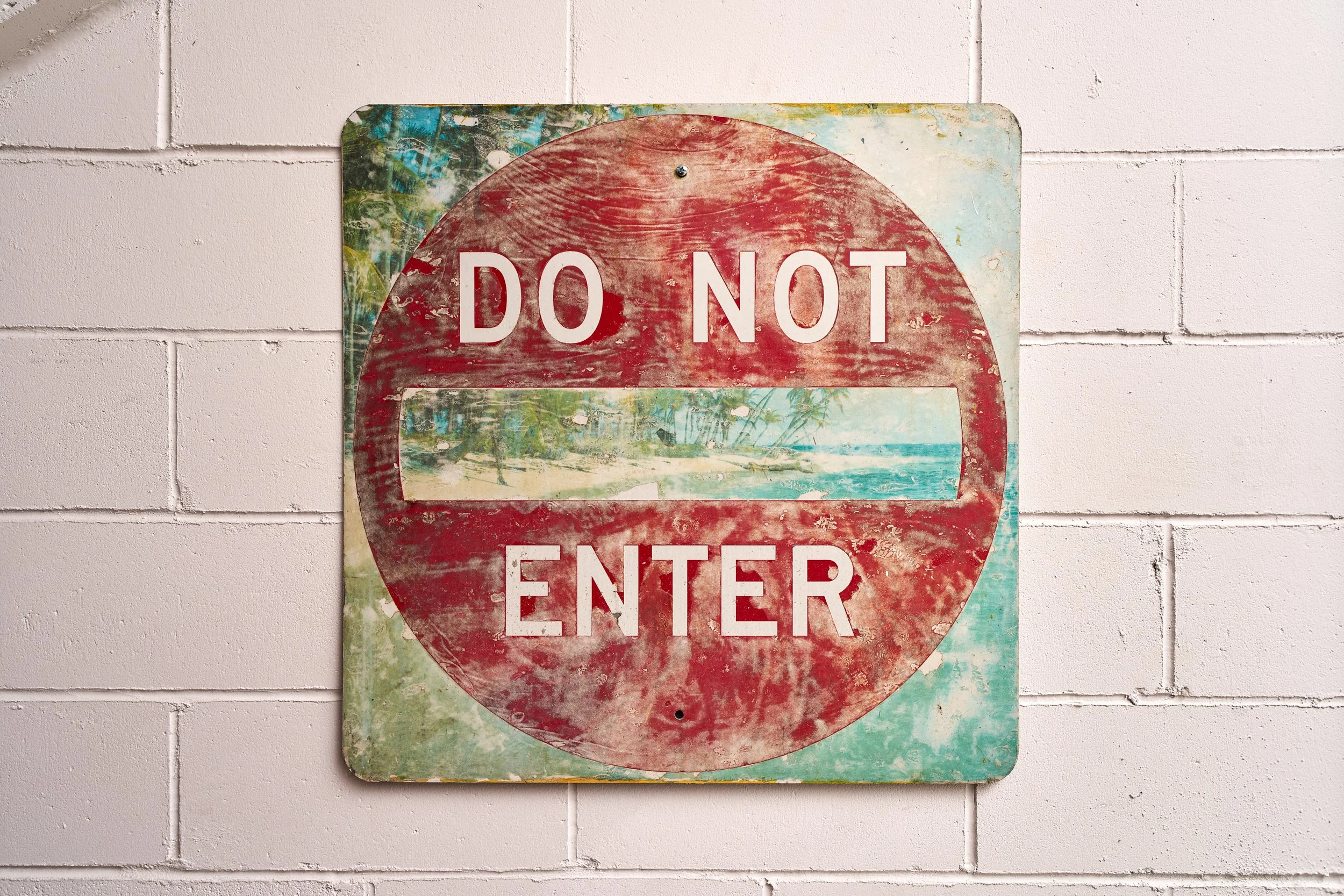
While linked thematically, each presentation addresses a unique perspective on city life. The works gathered in Chelsea point to the ways in which communities can and often rely on its members for support when social services fall short. Foundational to the works on view are legacies of radical convening. They trace modalities of connection through spiritual traditions, revelry, and knowledge sharing. This is present in the paintings of Madjeen Isaac, where her signature painting style of hybridizing urban and tropical landscapes highlights her Caribbean upbringing in New York City, and her experience witnessing diasporic communities continuously create a sense of home away from home. It also appears in the practices of both Lamar Robillard and Justin Sterling. Robillard’s 3 Legged Spirit references the tobacco leaf as both a familiar product for cannabis users as well as a spiritual medium, while Sterling’s Riot Box series presents valuable “tools” in times of impending riot - be that the seeds for planting or champagne for celebrating. The spirit that still remains in some of the city’s cultural enclaves, despite rapid gentrification, imbues the photographs of Joseph Cochran II and sculptural work of Marcus Manganni. Where Cochran illustrates the useful mundanity of a daily card game between neighbors, Manganni reorients the myth of Argus Panoptes to consider the positive connotations of being both “watcher” and “the watched” within our communities.
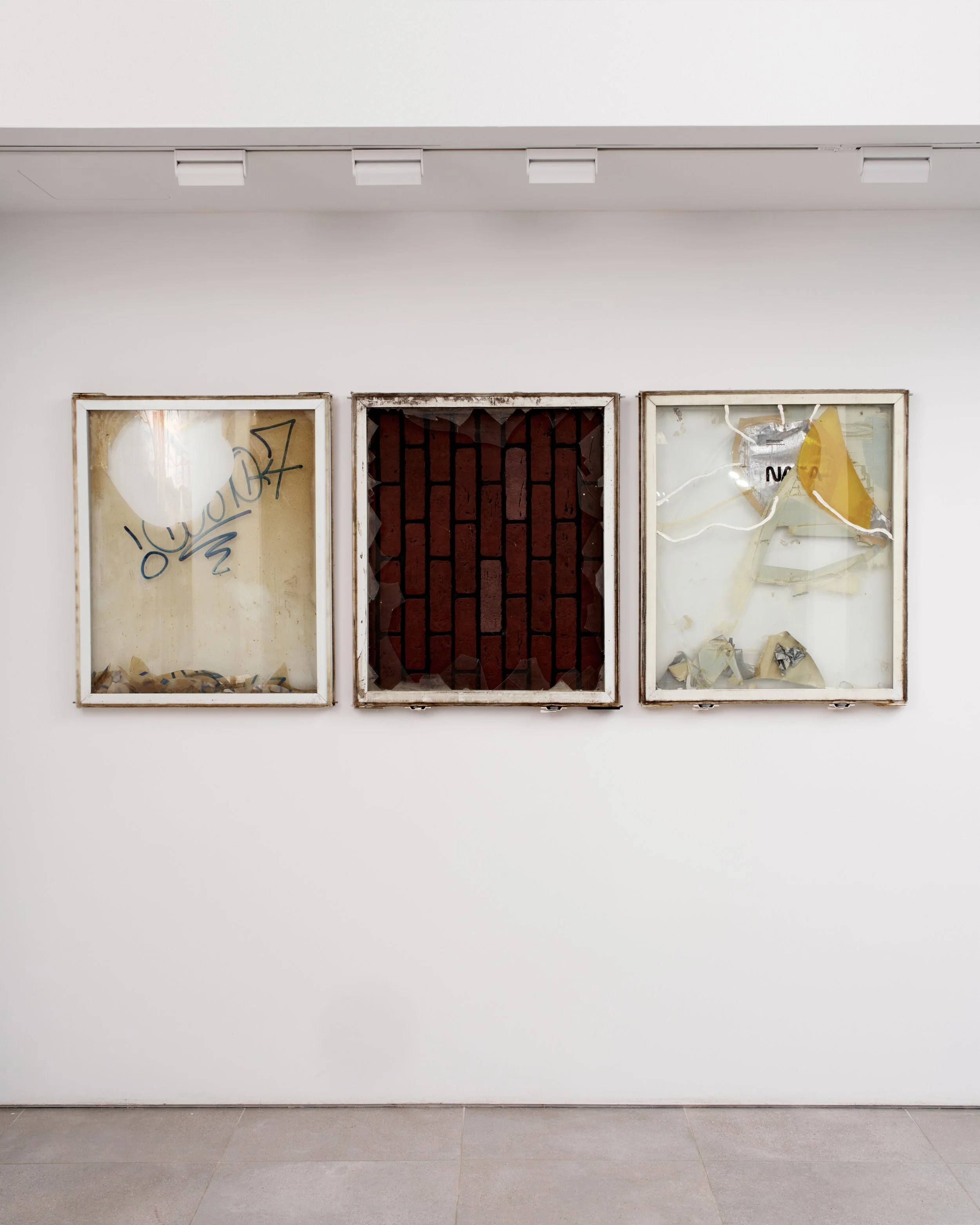
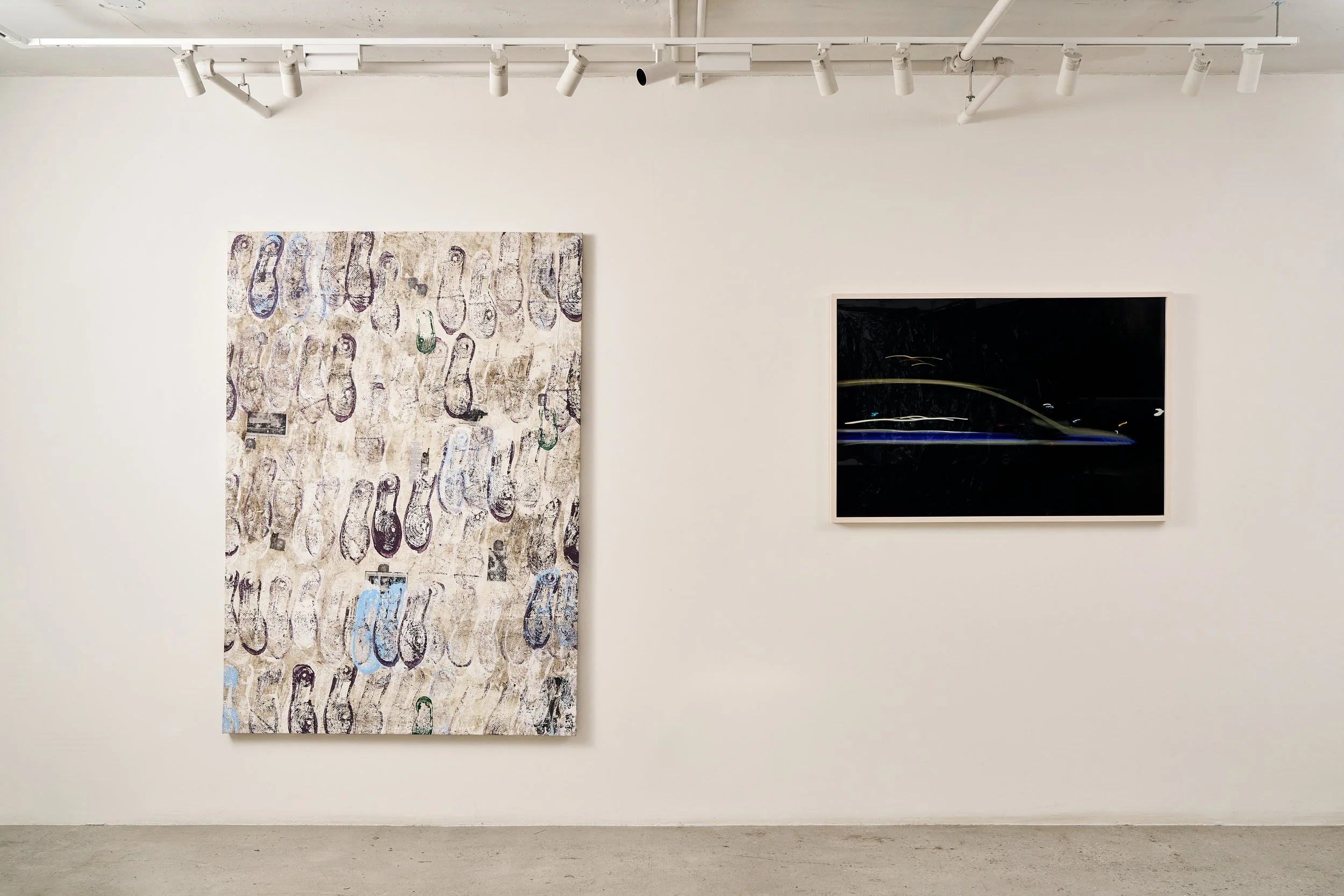
Within the Bowery presentation, artists address the systems that seek to diminish our collective humanity. Works like Yvonne McCoy’s Payton: In the City – a benefit print created in collaboration with Atomic Peace to provide rent-relief for Harlem residents – and Cochran’s Brooklyn, explore NYC’s sordid histories of redlining and the city’s continued issues around housing inequity. Robillard’s Placement Painting VI: Still Moving For MOVE, On the MOVE, What's the Move? honors the Philadelphia based organization MOVE whose members were attacked and subsequently killed en masse by Philadelphia law enforcement in 1985; one example of state-sanctioned violence on radical Black an brown organizing efforts.
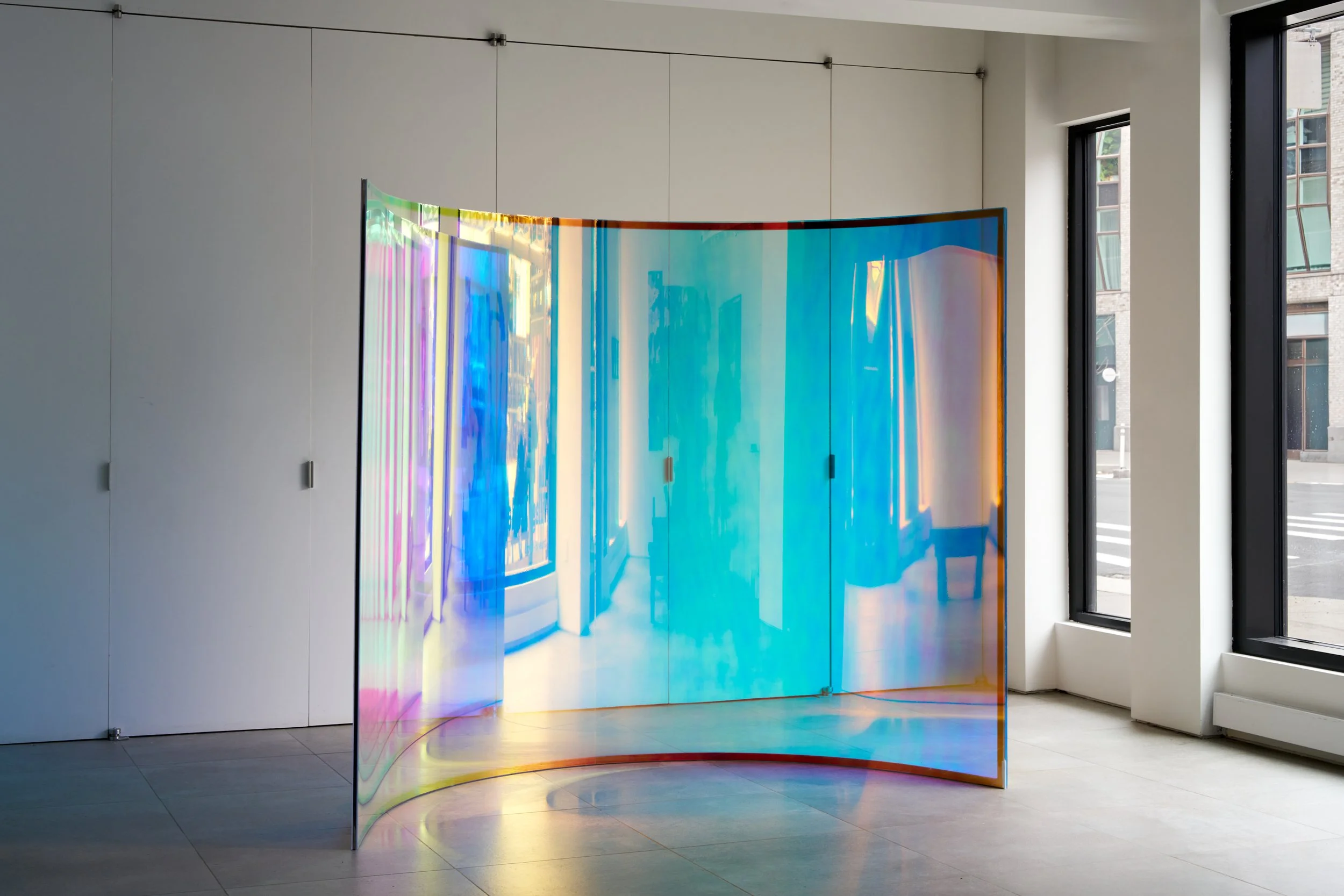
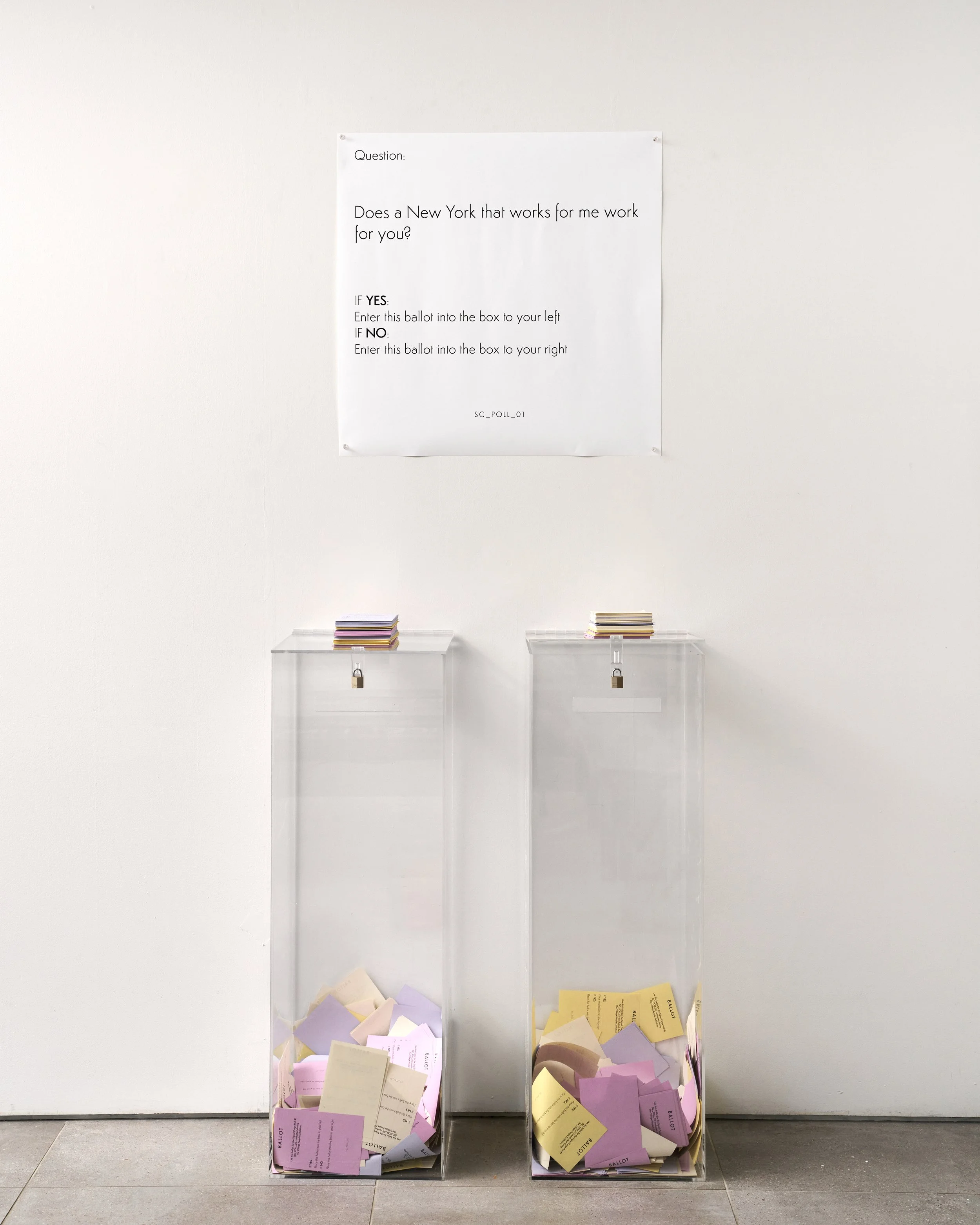
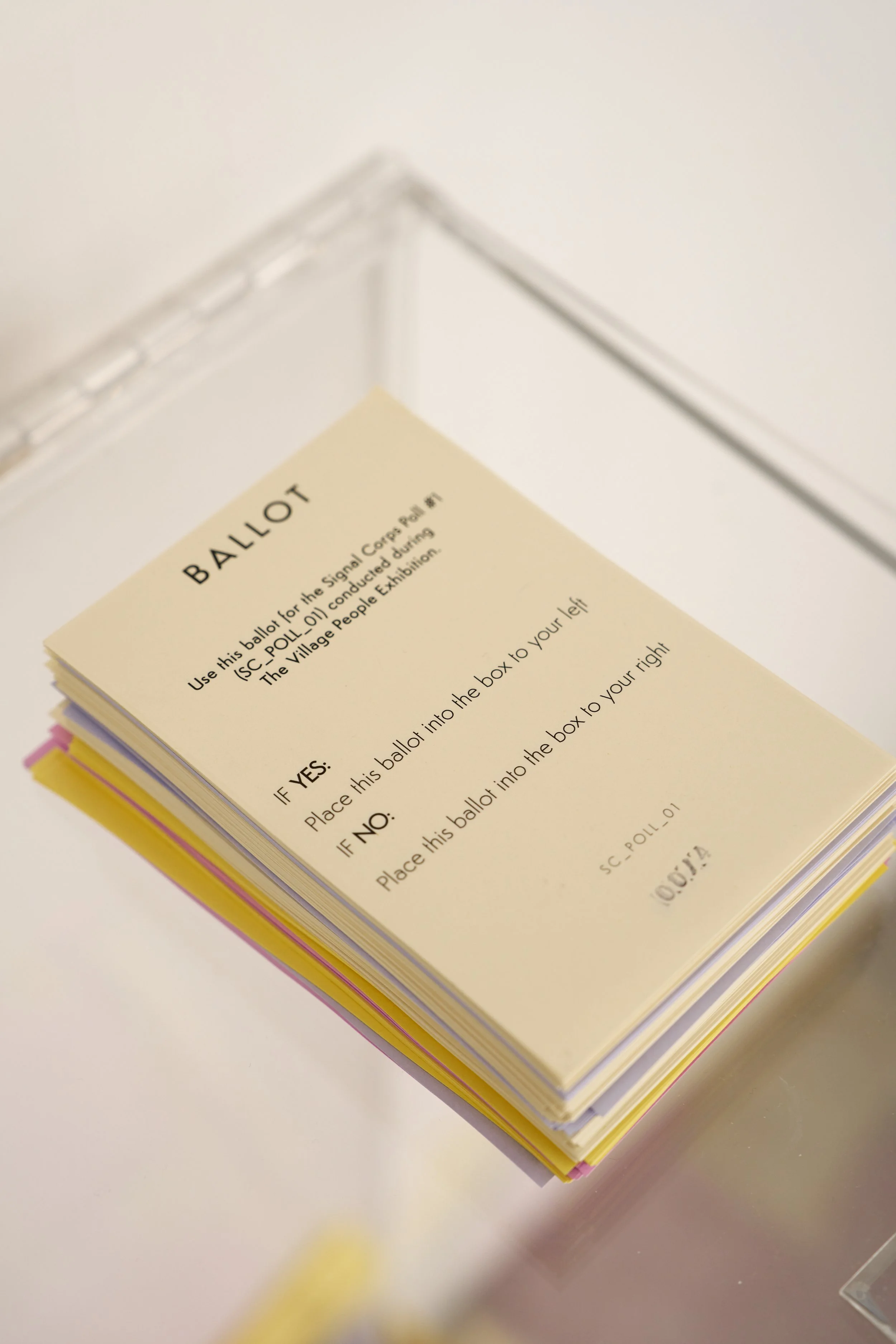
On view at Chelsea, Joseph Cochran’s installation Signal Corps Poll #1 (SC_POLL_01) asks viewers a single question:
“Does a New York that works for me work for you?”
Cochran explains, “The wording is intentionally plain, mirroring the simplicity with which high-stakes collective decisions are often framed. In the space between ‘me’ and ‘you,’ the work surfaces [possible] contradictions, forcing participants to measure personal comfort against public life, and to confront how easily self-interest can be mistaken for a shared future.” This work highlights an important intention in the curation of the exhibition, as The Village People is less about NYC or any other urban center, and more an invitation to continue thinking expansively about how we build and sustain generative ecosystems together under oppressive structures.